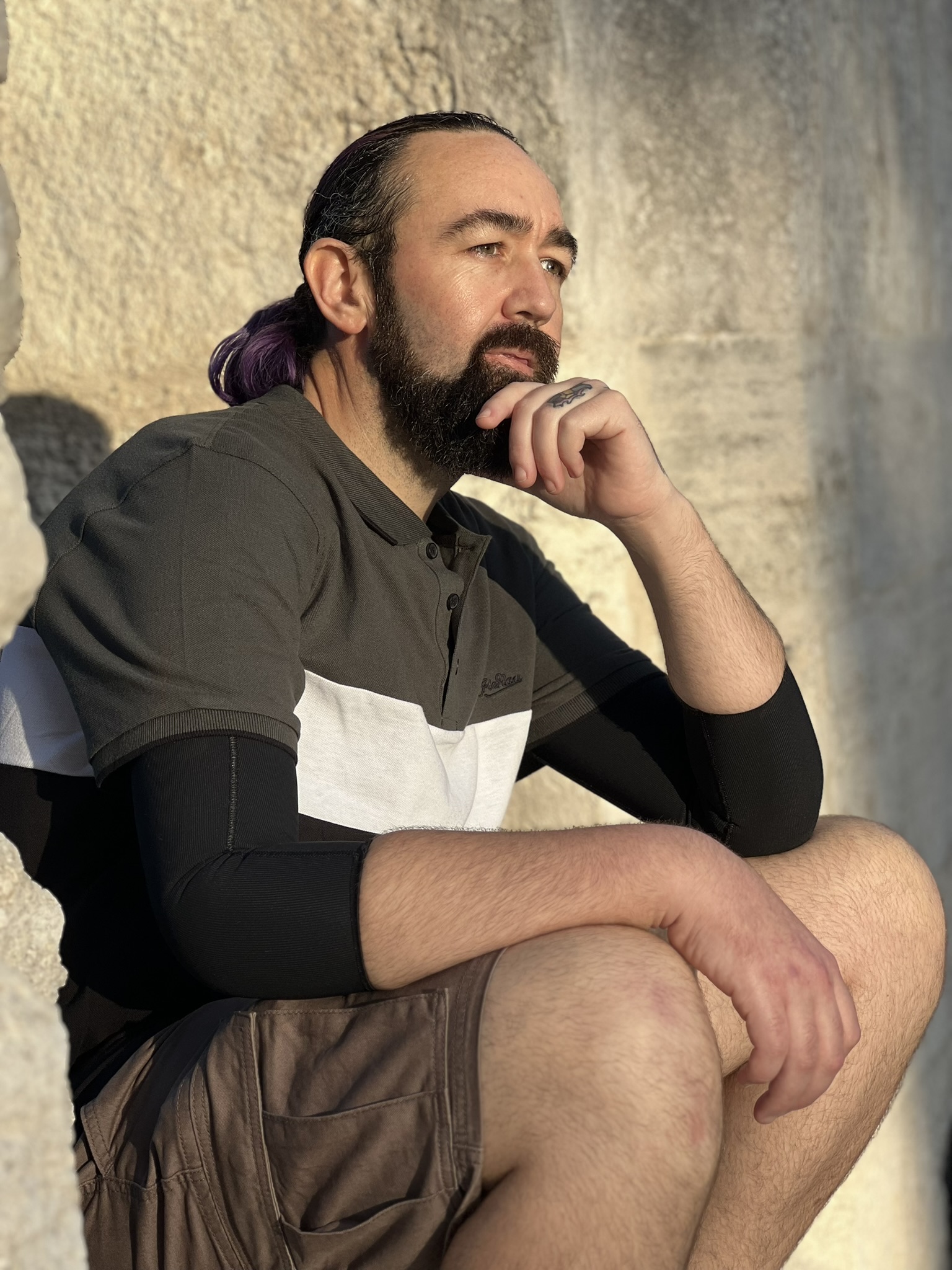
Josh Finlay
Network engineer, software developer, and telecommunications specialist.
I'm the person who gets called when something is broken and nobody can figure out why, or when someone needs to build something that doesn't exist yet. I genuinely enjoy both of those problems.
How I Got Here
Following the interesting problems
I didn't set out with a master plan. I just kept following the interesting problems.
Early on, that meant learning how networks actually work—not the textbook version, but the messy reality of BGP sessions that won't establish at 2am, undocumented vendor behaviours, and configurations that work perfectly in the lab and explode in production. I got hooked on the puzzle-solving aspect of it. Every network issue is a mystery, and I've always liked mysteries.
Over time, the scope expanded. Routing and switching led to voice platforms. Voice platforms led to subscriber management. Subscriber management led to "we need custom software to tie all this together." So I learned to build that too. Laravel backends, React frontends, database design, API integrations—whatever was needed to solve the actual problem, not just the networking slice of it.
That's how Athena Networks came to exist. I wanted to build a company that could tackle the whole problem, not just hand off pieces to other vendors and hope it all fits together. We're a small team—four people—but we can go from whiteboard architecture to production deployment without needing to translate between three different companies along the way.
What I Actually Do
Two roles, one thread
Kinetix Networks
Senior Systems Engineer
I work on the engineering team for a national fibre network with 121 points of presence across Australia. My days involve Nokia SR-OS, IP Infusion OcNOS, and Huawei VRP—designing and maintaining the EVPN/MPLS fabric that delivers wholesale services. I'm also building out a network orchestration platform using Infrahub as the source of truth, with a Laravel and React stack on top.
Athena Networks
Founder
Network design and deployment. Carrier voice platforms built on Kamailio, FreeSWITCH, and RTPengine. Custom software for telco workflows. Sometimes it's a greenfield build; sometimes it's untangling years of accumulated technical debt. I like both.
The common thread is that I get to work on problems that matter to the people paying for them. Telcos and MSPs don't have much patience for theoretical elegance—they need things that work, that scale, and that they can actually operate. That constraint makes the work more interesting, not less.
The Technical Stuff
For those who care
I've worked across most of the major routing platforms at this point: Nokia SR-OS, Juniper Junos, Cisco IOS-XR, MikroTik RouterOS, Huawei VRP, IP Infusion OcNOS. Each has its quirks. Each has made me swear at a screen at some point.
On the software side, I'm most comfortable with Laravel for backends and React for frontends. I've been exploring Go and Rust for performance-critical pieces. I run a Proxmox homelab with Ceph storage and some NVIDIA GPUs, which has become my testing ground for AI experiments—RAG systems, vector databases, agent-based workflows. Still learning in that space, but it's where a lot of my curiosity is pointed right now.
Routing Platforms
Protocols & Technologies
Voice Platforms
Software & Dev
Infrastructure
Exploring
Being Honest
About weaknesses
I'm good at solving problems. I'm good at translating business requirements into technical implementations. I can hold a complex system in my head and reason about how changes will ripple through it.
I'm not good at driving accountability—following up repeatedly when things slip. I'm not good at delegation—I tend to think "it's faster if I just do it myself," which doesn't scale. I don't enjoy reading dense regulatory documents, and I have a bad habit of avoiding tasks I find boring until they become urgent.
I've learned to work around these. Automation helps. Good systems help. Working with people who are strong where I'm weak helps. But I think it's worth being upfront about it. Everyone has gaps; the question is whether you're aware of yours.
Outside of Work
The rest of the picture
BBQ & Smoking
This is probably my main hobby. There's something deeply satisfying about managing a fire for eight hours, making tiny adjustments, and ending up with brisket that falls apart when you look at it. It's the opposite of the instant feedback loops in tech work, and I think that's why I like it.
The Homelab
Okay, this one is still tech, but it's recreational tech. A Proxmox cluster, Ceph storage, GPUs for ML experiments, and a rotating cast of VMs running whatever I'm curious about that week. It's where I try things that would be irresponsible to try in production.
Home
I live in Brisbane with my wife Tegan. We've built a good life here—close enough to everything, far enough from the chaos. Brisbane's not the flashiest city in Australia, but it suits us.
Get In Touch
Let's talk
If you want to talk about networks, voice platforms, software, or any of the above—I'm always happy to chat.
josh@finlay.id.au